Do you ever wonder how it feels like Facebook/IG are listening to our conversations at times? If you want to know why this happens, read on. tl;dr get yourself a DNS Blocker/Encrypter, stat.
The most common question I get as a professional nerd is invariably some form of "how can I be more secure/get better performance online?" The answer might surprise you. If you guessed "use a VPN" ❌ 😮💨😔
For decades, VPNs providers have gotten rich by stating that VPNs keep you safer online. VPNs do next to nothing to keep you safer online, so save your 💵 and invest in a DNS Blocker/Encrypter. And yes, it needs to do both to be effective. Either half by itself is better than nothing, but the 1-2 👊 of a blocker+encrypter is worth the extra configuration.
To answer the question I posited at the beginning about FB/IG being able to read our minds, the answer is surprisingly simple, albeit arcane unless you are an IT pro or advanced user. And in a very creepy way, yes, our phones do read our minds, we just don't realize we, the users, are the culprit. That, and a main protocol of the internet called DNS.
By now, it's been hammered into our heads to always make sure we've got the padlock when surfing websites so we know the page is encrypted. The problem is that while yes, the page contents are encrypted, the request to fetch the IP address of the page (along with all the other IP requests issued by the browser in order to assemble the web page.) Every web resource has an IP address, and a web page generally speaking is made up of a collection of requests to IP addresses to stitch the page together.
Some of those requests go and fetch ads, either banners or interstitial. Actually, it's a lot of requests. And due to the way web browsers work, pages have to wait for all IP address requests to finish so the browser can assemble the page. That includes requests for ads, which usually are located elsewhere, and thus the requests can be slower, thus holding everything up and slowing down your web browsing experience.
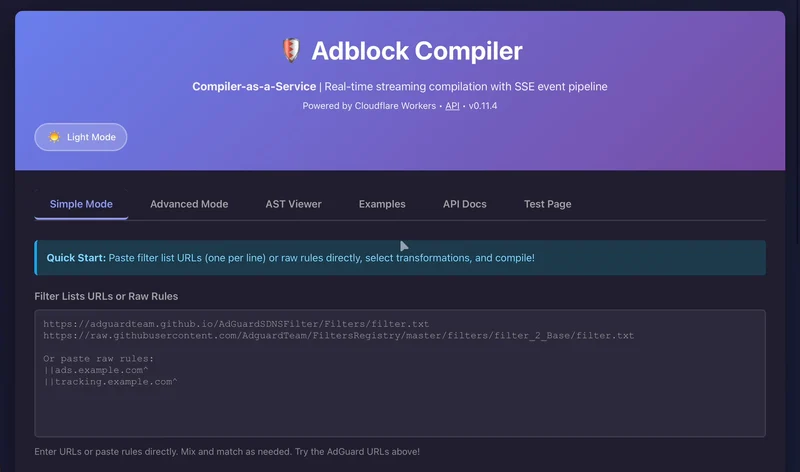
DNS Blockers block ads (and other nuisances like trackers, cookies…there are a lot of options) at their source, which is at the IP address level. DNS Blockers read lists of rules in order to know which IP addresses serve ads, and thus, can be blocked. The lists are updated several times a day, thus you can literally set it and forget it. By simply changing your DNS servers to a blocking service, you'll never see another ad ever again. You can also configure it to lock the device down for children, blocking undesired content like social media or adult sites at the IP level, thus keeping them safe.
There are numerous services that offer free public DNS servers that block ads, trackers, adult content, etc, the two largest being Cloudflare and AdGuard. Changing your DNS servers to 1.1.1.1 and 1.0.0.1 will eliminate virtually all ads out of the box. If you need more control over the server by creating your own rules, you can get a completely customizable server for like $5/year with AdGuard or OpenDns. There are dozens of vendors.
Back to how our devices read our mind. Web pages are encrypted, but the requests to look up the names of the servers that make up the web page are not encrypted. Your ISP can't read the web pages you're browsing, but anybody with access to your internet line can see where you are going, they just can't see the actual content. But, they can see every request you make on the web, and thus can easily piece together what you're doing online.
Let's say you're talking to your friend Alice about buying a new car, and you tell her you're looking at Ferraris. Chances are good that whatever you're talking about in your daily conversations reflect things you're doing online. You've probably gone to the Ferarri website a few times, and perhaps a competitor's page as well. Your ISP can see all of those requests and easily figure out you're shopping for a luxury car.
Your ISP then immediately sells that information to various data brokers, which serve as clearinghouses for funneling that data on to sites like Facebook, IG, TikTok, etc, and all of this happens in a matter of milliseconds btw. ⬅️ and thus, this is why it can feel like sites are reading our minds. In a way, they are, we just don't know we're enabling the pipeline needed for sites like FB to immediately get our browsing history, and then start throwing ads your way related to your browsing history. (there's a whole lot more collected then just our DNS requests btw…if you're curious, look up digital fingerprinting and then good luck getting any sleep afterwards.


No comments yet